Sense
A sensing element monitors the relationship between line and neutral current.
 中文Start an inquiry
Explore ground-fault protection, self-test functions and product standards.
HOW GFCI WORKS
Under normal conditions, current flowing through line and neutral is balanced. A GFCI is designed to detect an unintended difference and respond through its protection chain.
A sensing element monitors the relationship between line and neutral current.
The detection circuit evaluates differential current against the protection logic.
The trip mechanism interrupts the circuit when the designed threshold is reached.
Self-test designs periodically verify the protection function and communicate status.
USE ENVIRONMENTS
These examples summarize public-safety guidance. Product instructions, locally adopted codes and the authority having jurisdiction determine the installation.
Potentially damp areas and locations near sinks are common GFCI applications.
Public-safety guidance identifies these locations among common protection areas.
Select an appropriate WR model together with a suitable enclosure and cover.
Confirm the destination market, circuit, installation and exact certification scope.
CERTIFICATION EVIDENCE
Review full-page previews for the UL GFCI, ETL product-safety and ISO 9001 quality-management records. Each certificate applies only to the products, operations and marks covered by that document.
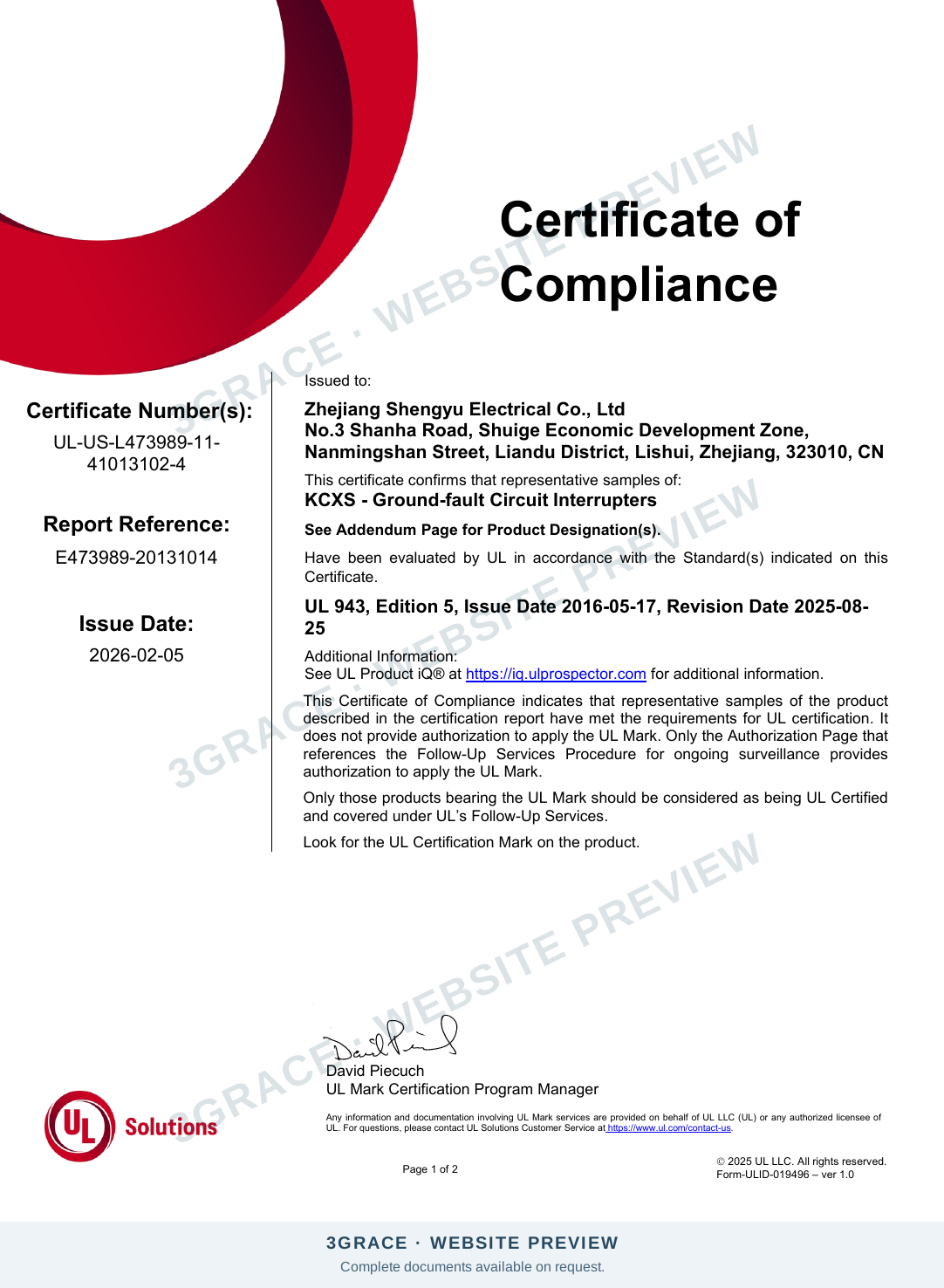 UL SolutionsE473989Ground-fault Circuit Interrupters
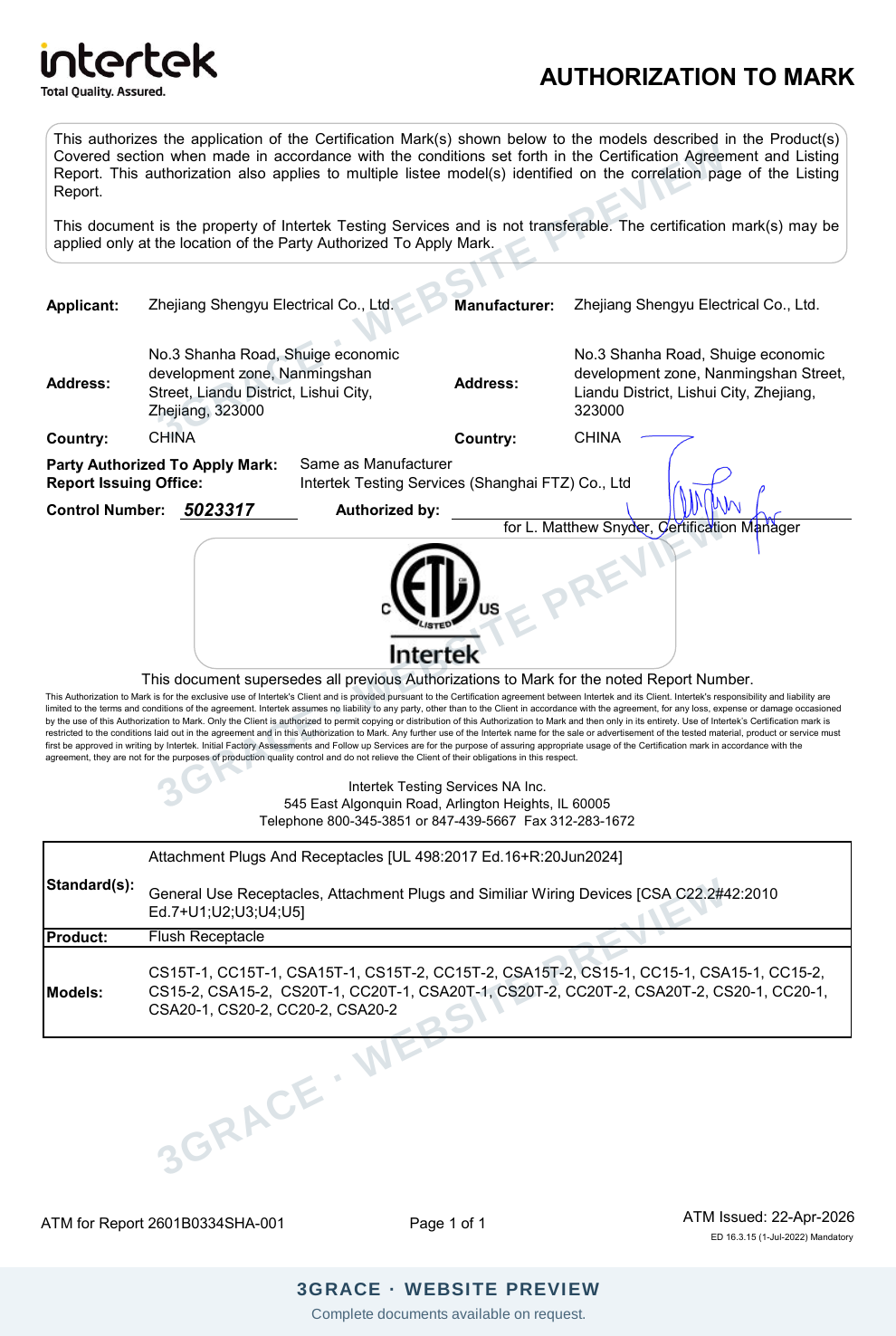 Intertek ETLControl No. 5023317Electrical Wiring Device Test Reports
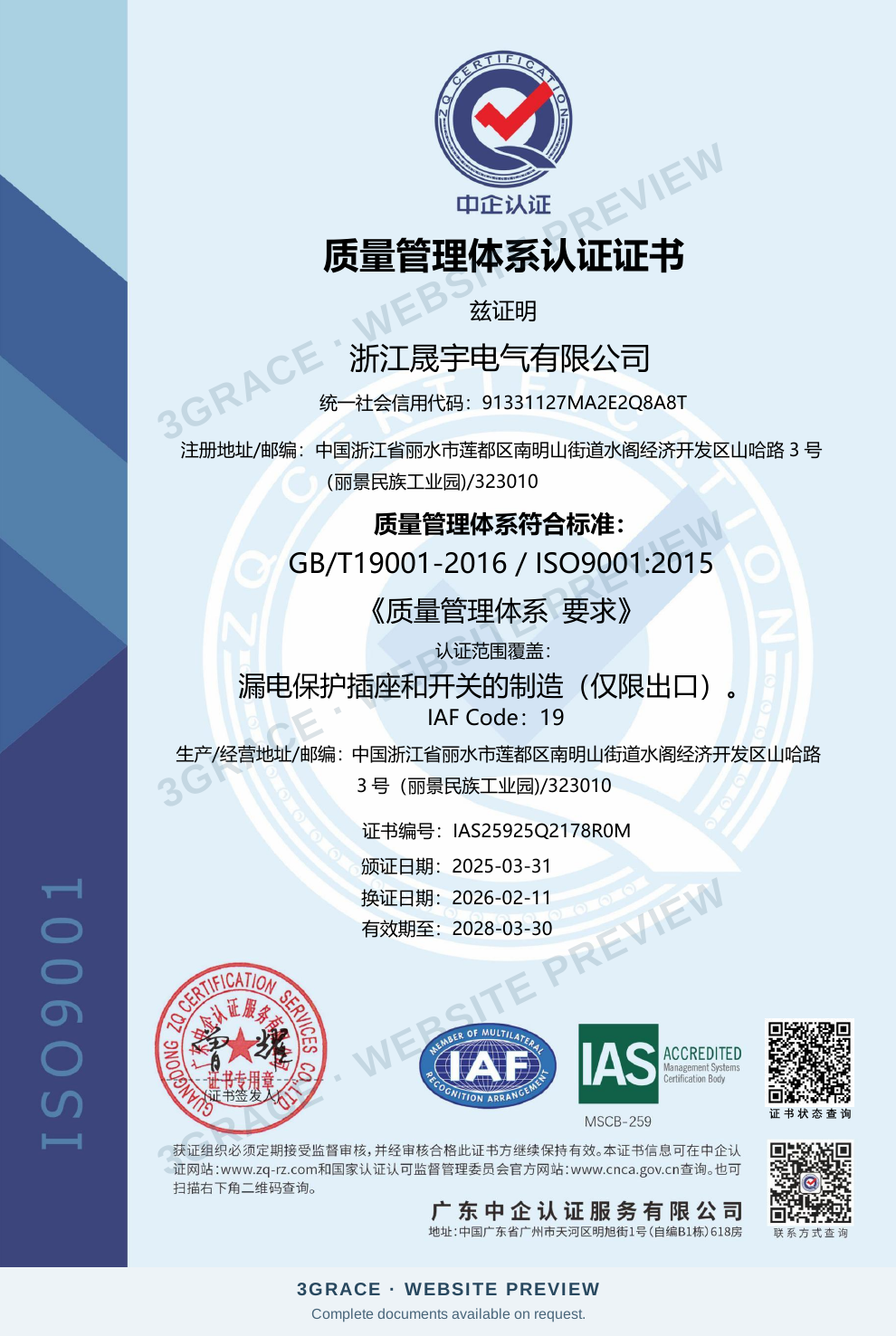 ISO 9001IAS25925Q2178R0MQuality Management System
QUICK ANSWERS
GFCI means ground-fault circuit interrupter. It is designed to interrupt a circuit when it detects leakage current associated with a ground fault.
UL Solutions identifies UL 943 and CSA C22.2 No. 144.1 for Class A ground-fault circuit interrupters.
Common examples include potentially damp areas such as bathrooms, kitchens, garages, basements, outdoor locations and places near sinks. Local adopted codes determine exact requirements.
The U.S. Consumer Product Safety Commission recommends using the TEST button monthly and following the manufacturer’s instructions.
TECHNICAL GUIDES
These technical notes support product conversations without replacing locally adopted codes, installation instructions or model-specific documentation.
PRODUCT CARE
CERTIFICATION GUIDE
PROJECT PLANNING
GFCI BASICS
PRODUCT SELECTION
FEATURE GUIDE